


- How do your children use Facebook?
- Have any of your children ever experienced cyber-bullying?
- What is your local school’s policy on social media use?
- Would you support or implement a licence system with your children to guide their Facebook usage?
- Do you believe that schools should play a role in monitoring your children’s use of social media?
These are some of the key issues underlying the current debate between parents, schools, social media experts and industry professionals. These issues have stemmed from recurring problems of cyber-stalking, cyber-bullying of children and inappropriate use of social networking sites and technologies.
Cyberbullying is a serious problem. “Everything from hurt feelings to emotional abuse, isolation, depression and humiliation can result from posts on Facebook,” says Tom Jacobs, a retired juvenile judge who wrote the book “Teen Cyberbullying Investigated“. (Fox News, 2011)
In the same article, Andreas Kaplan (Professor of Marketing at the European School of Business) outlines the six different types of social media:
- Collaborative projects (e.g. Wikipedia),
- Blogs and microblogs (e.g. Twitter),
- Content communities (e.g. YouTube)
- Social networking sites (e.g. Facebook),
- Virtual game worlds (e.g. World of Warcraft)
- Virtual social worlds (e.g. Second Life).
Many parents are unaware of the fact that Facebook’s official policy is that children under 13 years of age are prohibited from having an account. Despite this, as many as 7.5 million kids under the age of 13 are using it, with 5 million of these under the age of 10. (Fox News, 2011)
Facebook’s official statement to these figures was as follows:
“Recent reports have highlighted just how difficult it is to implement age restrictions on the Internet and that there is no single solution to ensuring younger children don’t circumvent a system or lie about their age,” the statement reads. “We appreciate the attention that these reports and other experts are giving this matter and believe this will provide an opportunity for parents, teachers, safety advocates and Internet services to focus on this area, with the ultimate goal of keeping young people of all ages safe online.” (Cited in Fox News, 2011)
In a recent article published in the Sydney Morning Herald Education section, Dr Michael Carr-Gregg, suggested that “NSW schools should introduce a licence for students before they can use mobile phones and tablets at school” (smh.com.au, 2012) Dr Carr-Gregg’s intention is to facilitate greater use of technology. He wants to ensure that students are taught safe and responsible use is and then obtaining their agreement to abide by a set of rules and conditions. He believes there is no point banning them however we should ensure they have the skills and knowledge to use something that is going to be a central part of their education. (Dr Carr-Gregg cited in smh.com.au, 2012)
Dr Carr-Gregg is one of Australia’s highest profile psychologists and an internationally recognised authority on teenage behaviour. He has published a book on this subject Real Wired Child (Penguin Books, 2007) which is an essential guide to the online world for children. From toddlers to teenagers the book provides guidelines for family Internet safety and how to minimise risks without limiting your children’s freedom online.
Some basic protocols for parents to monitor their children’s usage of Facebook are:
- Avoid stating location or saying you are home alone;
- In your profile, do not reveal your exact age
- Make sure you know your child’s username and password.
If you have any suggestions on how to encourage responsible use of social media and how you monitor it with your own children, we would love for you to share them so that other parents can also use this resource.
Resources:
- John Brandon, Fox News 10th May, 2011, Survey Says: 7.5 Million Kids on Facebook Are at Risk
- Andrew Stevenson, August 28, 2012. Make kids get phone licence, says expert
- Michael Carr-Greg, 2007, Real Wired Child, Penguin Books
- Michael Carr-Gregg website
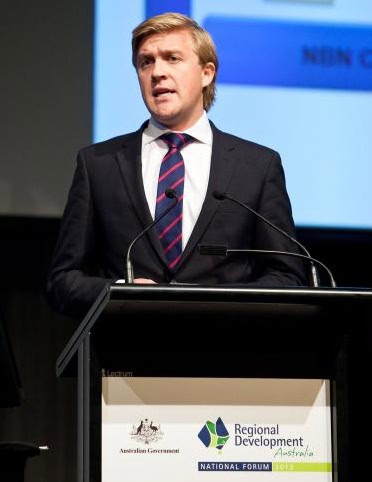
Joe Dennis
Introducing Joe Dennis. Joe grew up in a tiny place north-west of Wagga called Collingullie. With the three boys in the family all pursuing different careers, since leaving school Joe has travelled the world a number of times, learnt spanish and worked in politics. Now Joe spends most of his time travelling around to all parts of Australia, working for the NBN Co.
1. What boarding school did you go to?
St. Ignatius’ College, Riverview
2. What was your best experience at Boarding School?
Winning the Head of the River
3. What is your favourite memory from Boarding School?
The lifelong friends I made through the boarding house. Still to this day my best friends are from my school days. The bond you form through those years is incredible.
4. What are you doing now?
I am working in Government Relations for NBN Co.
5. Has anything you learnt at boarding school helped you with your current career?
Everything I learnt at boarding school has given me a huge head start in life. From debating, the quality of teaching and study, through to compulsory sport, I feel as though as my time at boarding school was the definitive factor in my formative years.
6. Any advice for young kids going to boarding school?
Throw yourself into as many things as you can – sport, music, study, and everything co-curricular.
When I was in Year 7, a Year 12 boarder gave a speech to us saying your time will pass you quickly and you will get to the end and regret not doing more.
Utilise the opportunities you have, because when you get to the workplace you will recognise them as advantages.