


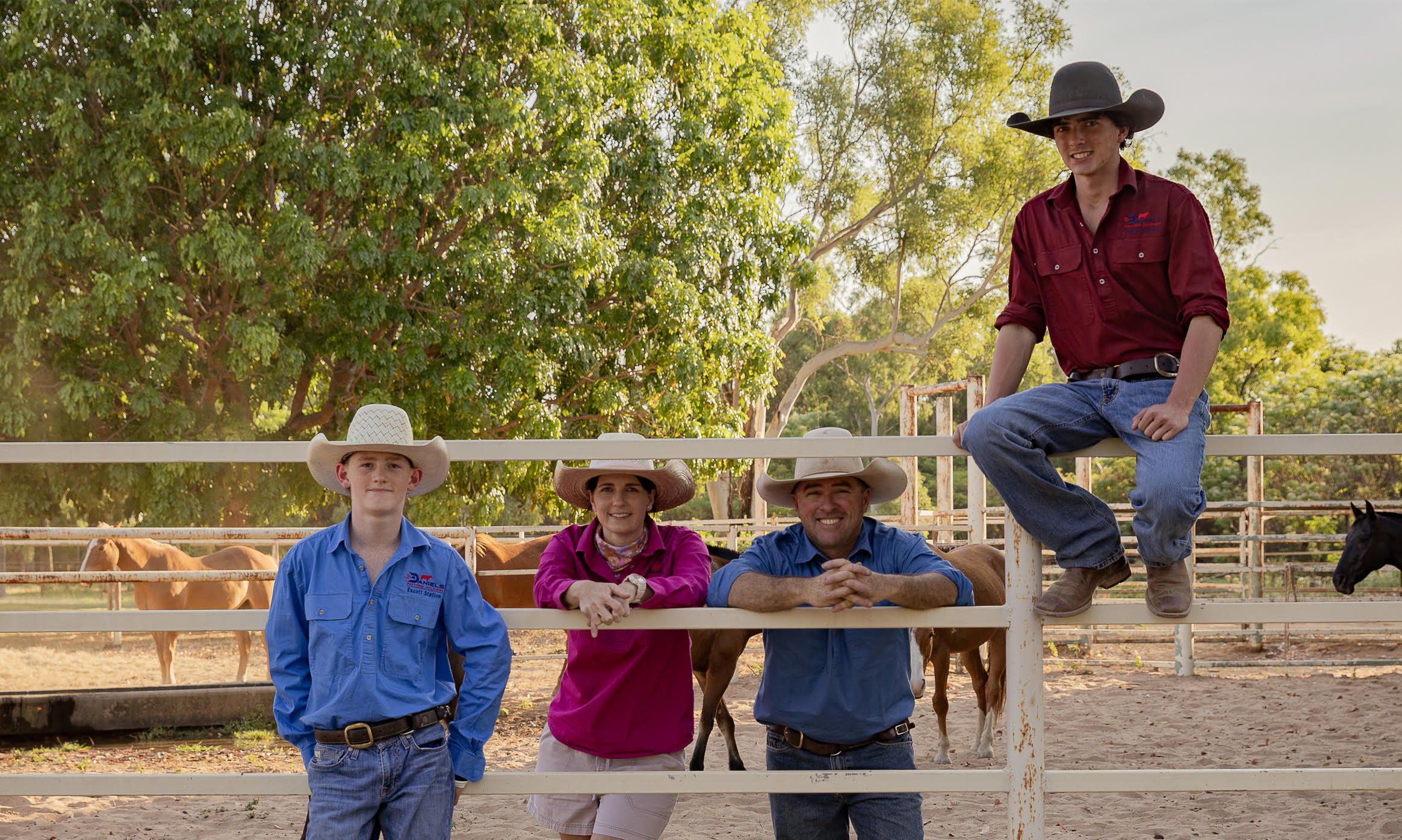
I grew up in Central Queensland near Rockhampton and attended an all-girls boarding school as a day girl. After finishing Year 12, I took a gap year while studying Animal Science externally at university. During that time, I worked as a governess on a corporate cattle station in South West Queensland. It was there, at age 17, that I met my husband Bernard, and we were married four years later.
Our boys were born at St Vincent’s Hospital in Toowoomba, and I remember looking out the window across to Toowoomba Grammar and saying, “Maybe you’ll go there one day.”
Over the next 12 years, we lived on cattle stations in the Channel country, the Pilbara and Kimberley in WA, the Barkly Tablelands in the NT, and finally the Gulf of Queensland. We have spent the last four years managing beautiful ‘Escott Station’ near Burketown in the gulf.
Boarding school was always on the horizon for our kids. It was a reality we knew would come, but it still seemed to arrive in the blink of an eye.
In 2022, when we dropped our eldest son off at boarding school for the first time, none of us knew what to expect. It didn’t help that covid restrictions were still affecting everyone’s experience, with face masks and strict rules around social interactions. The usual drop-off procedures were all out the window, and I wasn’t prepared for him to walk off with the other boys without wanting a public hug. I remember sitting in my car, driving away with my youngest son (my husband had to go back to the station early), and feeling in complete shock. I wasn’t upset, but I was overwhelmed. As I stopped the car, I thought, “I really shouldn’t be driving.” It sounds dramatic, but I felt like I’d left a part of me at the school.
Other experienced boarding families advised us to leave straight away: “Don’t hang around, just leave town,” they said, so we did. Over the next two days, I drove 2000 kilometers home with our youngest son, constantly thinking about what our other son was doing. We even started checking the boarding house schedule, trying to imagine what he might be up to at any given time, even weeks after drop-off. I never stopped wondering what they were doing.
The second time around, when our youngest was heading to boarding school for the first time, we did things completely differently. We took our holidays in February to spend time with the boys at school. We attended as many school functions as we could, which was a wonderful way to immerse ourselves in the school community. It didn’t make it any harder for our youngest to settle in, though. He even asked a few times, “When are you leaving?”
Once we were back home and back to work, life with a few staff members around kept us busy. I didn’t feel the absence of the boys as much as I thought I would, though the house was much quieter. The real emptiness hit at local events. Simple things like going to get an ice-cream when we picked up the mail or attending the local show without the boys were harder than I expected. Those experiences weren’t the same without them. On holidays, we didn’t feel like doing anything fun because it didn’t feel right without the boys there to enjoy it with us. We chose to save those experiences for when we were all together again.
To ease the initial separation, we set dates to visit the boys, which gave us something to look forward to. We used these visits to help us cope with the wobbles. Living so far away meant our visits were less frequent, but we made a commitment to see them at least once each term. Knowing they were busy and enjoying themselves made the first few weeks a lot easier.
The boys took some time to adjust to the rules and routines at school. Once they’d made good friends, things started to feel more settled. Our eldest met a friend at a Grammar sleepover the year before he went to school, and they paired up again on the first day. Our youngest, on the other hand, struggled more with the adjustment. Although they were both in the same boarding house in Year 7, they had very different experiences. Seeing them at school, interacting with teachers and their peers, and knowing they were fitting in reassured us that their worst days weren’t every day.
It was also reassuring to see the opportunities boarding school provided—things they never had living so remotely. They got to experience NRL games in Brisbane, weekend activities, GPS training and games, school excursions, and the camaraderie in the boarding house. These were all things we knew they wouldn’t have had access to at home, especially our youngest, who had spent the last three years doing School of the Air on his own. No child could have been keener than he was to join the action with other kids.
Since the boys left, our bond with them hasn’t changed. My eldest called me every night until Year 10, though he’s started to slow down now. Our calls were rarely sad; they were just regular catch-ups, which I loved. Our youngest, however, had more sad calls, which were heartbreaking, but they’ve started to call more often now, and you can tell he’s eager to get off the phone and play with the other boys. It’s hard to be calm and comforting during those upset calls, but it’s necessary.
Besides our nightly phone calls, the boys also email during the day if they need anything or want me to check a draft assignment. After spending years being so involved in their education through School of the Air, not being involved in their learning at school was a tough adjustment. But reading drafts or checking in on their progress gave us something to talk about, which was helpful. Some nights, you have to dig deep for conversation, but there’s always something, even if it’s just asking what they had for dinner. Learning the names of their friends and where they’re from has also given us common ground to connect over.
Initially, I would send care packages, letters, or even get the stock camp guys to send postcards to our eldest. As he settled in, this tapered off, but when I sent a letter to our youngest recently, he said, “Yeah, I got it, but I haven’t had time to read it!” He’s definitely not a reader!
Remote parenting is a big job, especially when it comes to keeping up with school communications. Having a good relationship with the head of boarding and the head of the boys’ house is crucial. Strong communication is key from both sides. I’ve never hesitated to make a phone call to check on something, even if it’s just for reassurance. Boarding is teamwork, and the kids are our number one priority. As parents, we are their strongest advocates, even when distance divides us.
I love seeing the little changes in the boys—the way they conduct themselves, the way they speak. Their vocabulary and confidence have grown, which is exactly why we wanted them to go to boarding school. It’s been amazing to hear reports of them doing something kind or good at school or in the boarding house. Knowing that you’ve raised a good kid that others can appreciate is the best feeling.
For years, I dreaded the thought of sending our kids to boarding school. I couldn’t even watch a TV show about it without tearing up! But as time went on, it got easier. Our kids always knew they’d be going to boarding school. As they saw their peers leave, they knew their time would come, and they started to look forward to it.
Where we live, we don’t have a lot of options. Boarding school is the best opportunity we can give our kids, or we’d have to leave our job, our home, and our community. Boarding isn’t just an ultimatum—it’s the best choice for them, and we’re grateful for it.
For parents just starting out in the boarding school journey, my advice is this: Do what you think is best for your child—you know them better than anyone. If I could go back, I would have stayed around for the first week with our eldest. The first week is huge, and it’s exhausting for them. A quick hello and hug would’ve been reassuring for all of us.
One great tip I got from another boarding mum was to write a letter to the head of the house and to the school teachers. I did this for both boys, explaining where they were from, that they had done School of the Air and this was their first classroom experience. I included details on their learning styles and any potential struggles they might face. For boarding, I also included information like possible sleepwalking, their personalities, and how shy they were about asking for help.
We entered the boarding life with no expectations because I had no idea how it would work. Looking back, I would have asked more questions and for concrete examples. I’ve always remained unapologetic about pulling my sons out if they ever said they wanted to come home. Thankfully, neither of them has ever said that, even with all the tears and complaints about food, supervisors, or teachers. That’s when I knew they really wanted to be there.
Boarding school isn’t always easy, but we love that our kids have had the childhood they have, and we’re proud of the resilient, capable young men they’re becoming. We’re grateful for the experiences boarding school has given them, and we know these tools will help them thrive beyond what we could have ever imagined in the bush.